FindAside.
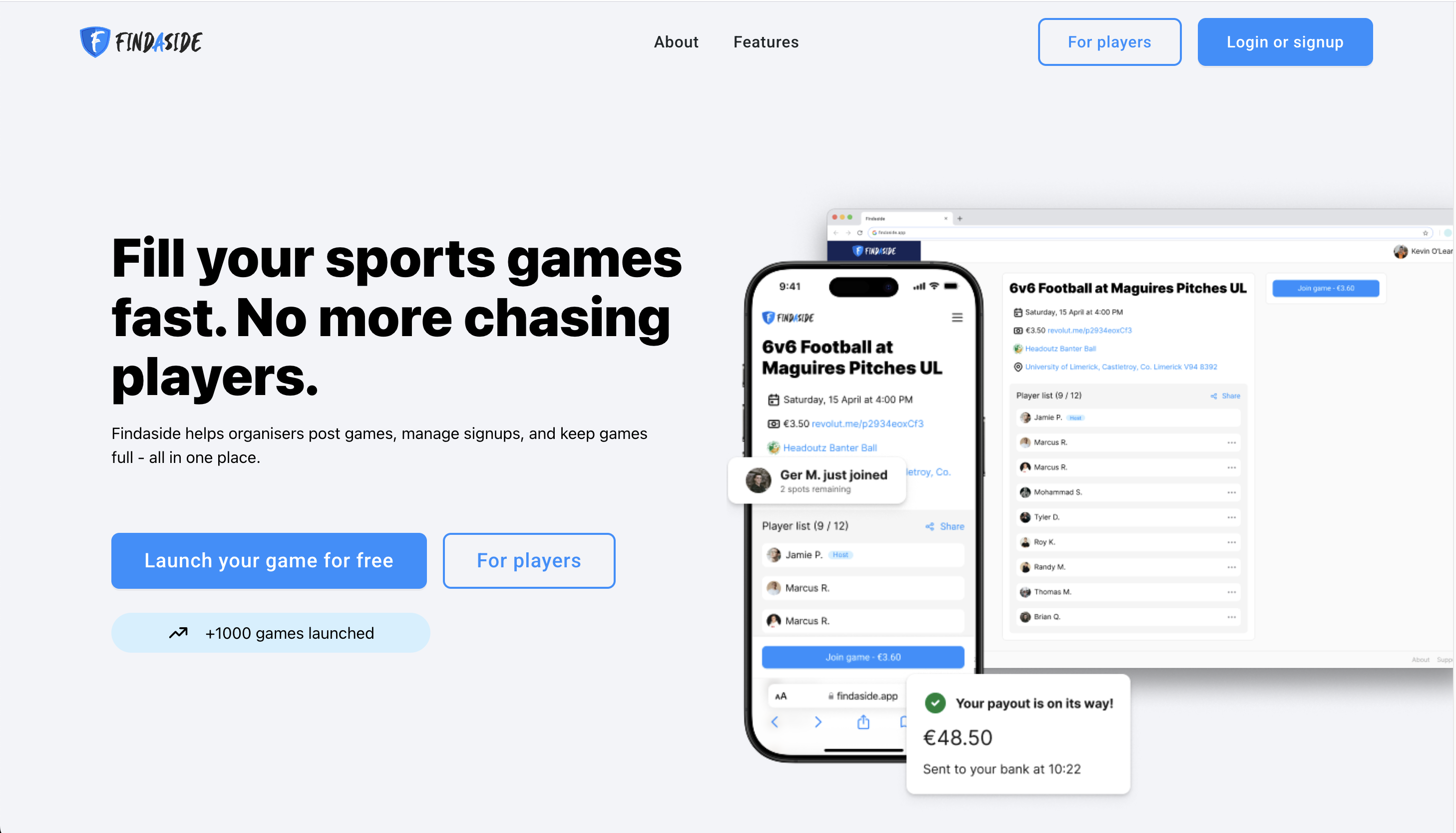
Contributed to the frontend experience of a sports game-management platform, building responsive interfaces for game creation, player coordination, team organisation and payment-related workflows. Also developed the product’s Next.js marketing website.
Delivered
Built responsive game-management interfaces and a Next.js marketing website during professional contract work.
- Scope
- Responsive web app
- Role
- Frontend Developer · Product UI Contributor
- Timeline
- 2025 · Pixel Forge contract work
01 / CONTEXT
Problem and response
Challenge
Hosts and players needed clear interfaces for organising and joining games, coordinating participants and understanding payment-related information.
Response
Responsive interfaces that organise game setup, discovery, player coordination, team management and payment-related information into clearer workflows.
02 / CONTRIBUTION
My contribution
Application interfaces
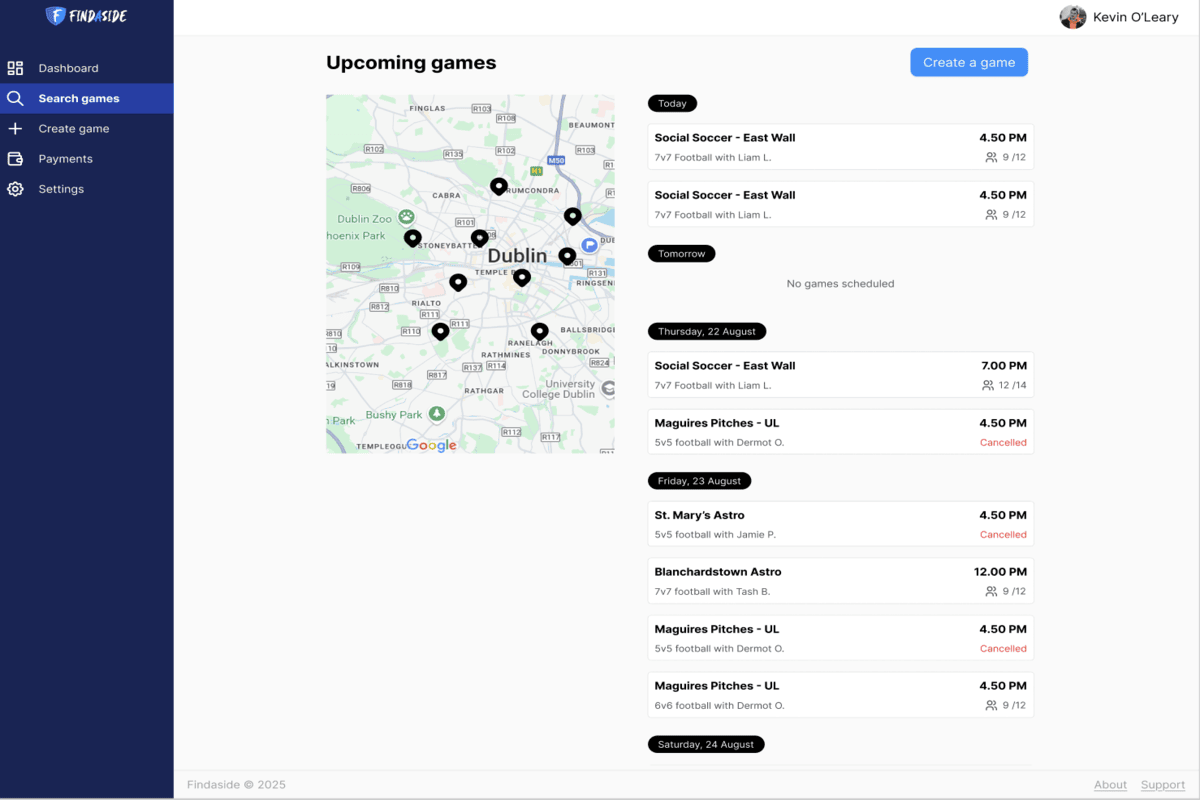
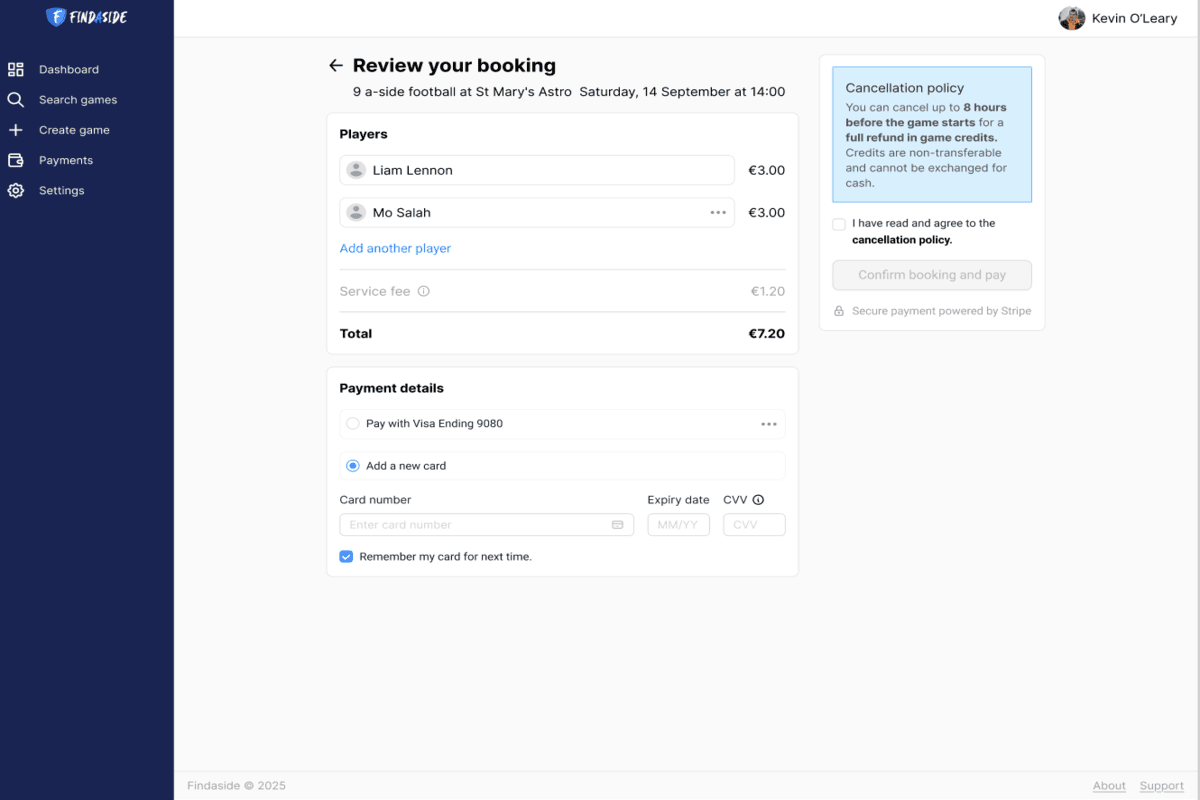
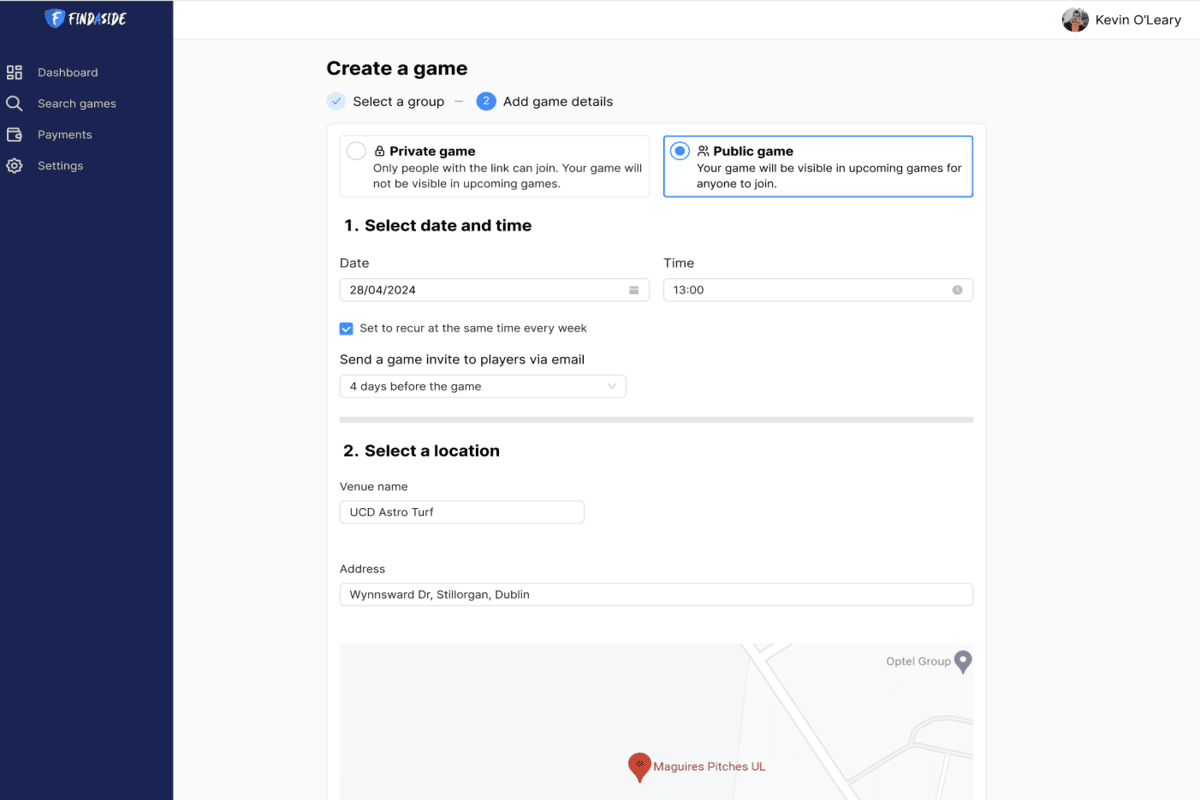
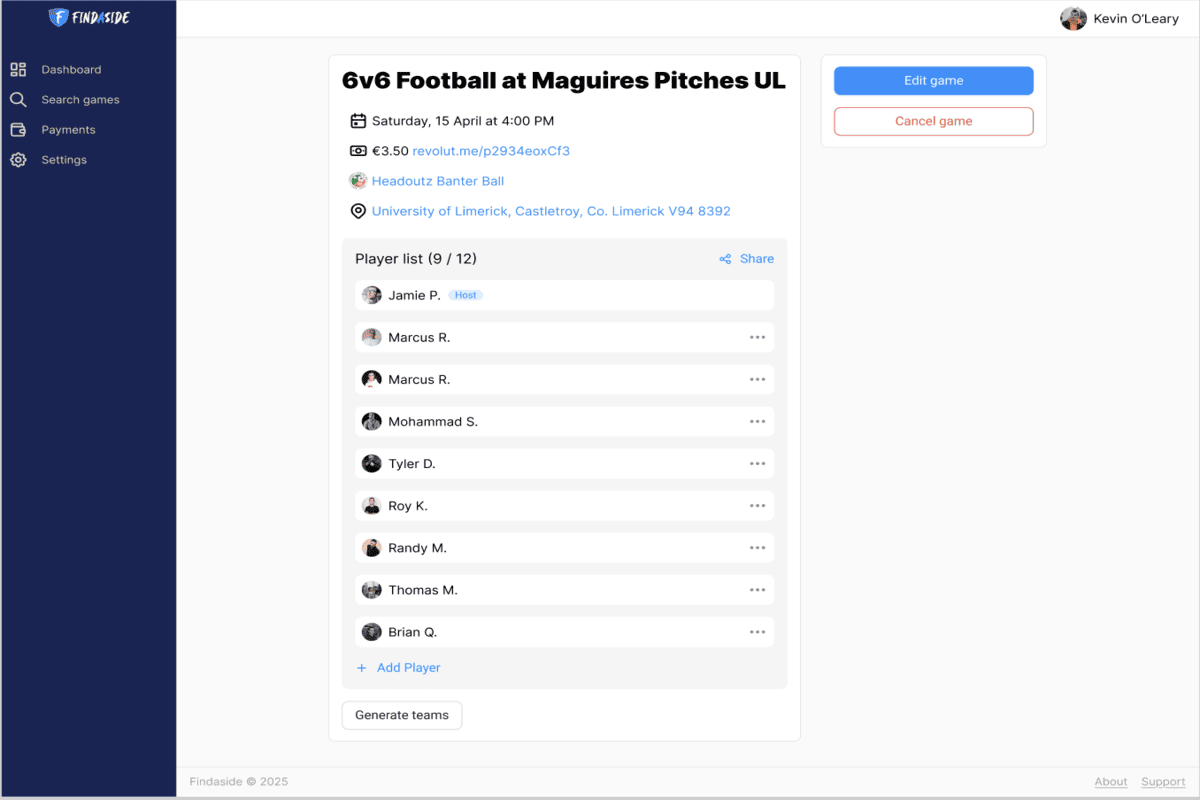
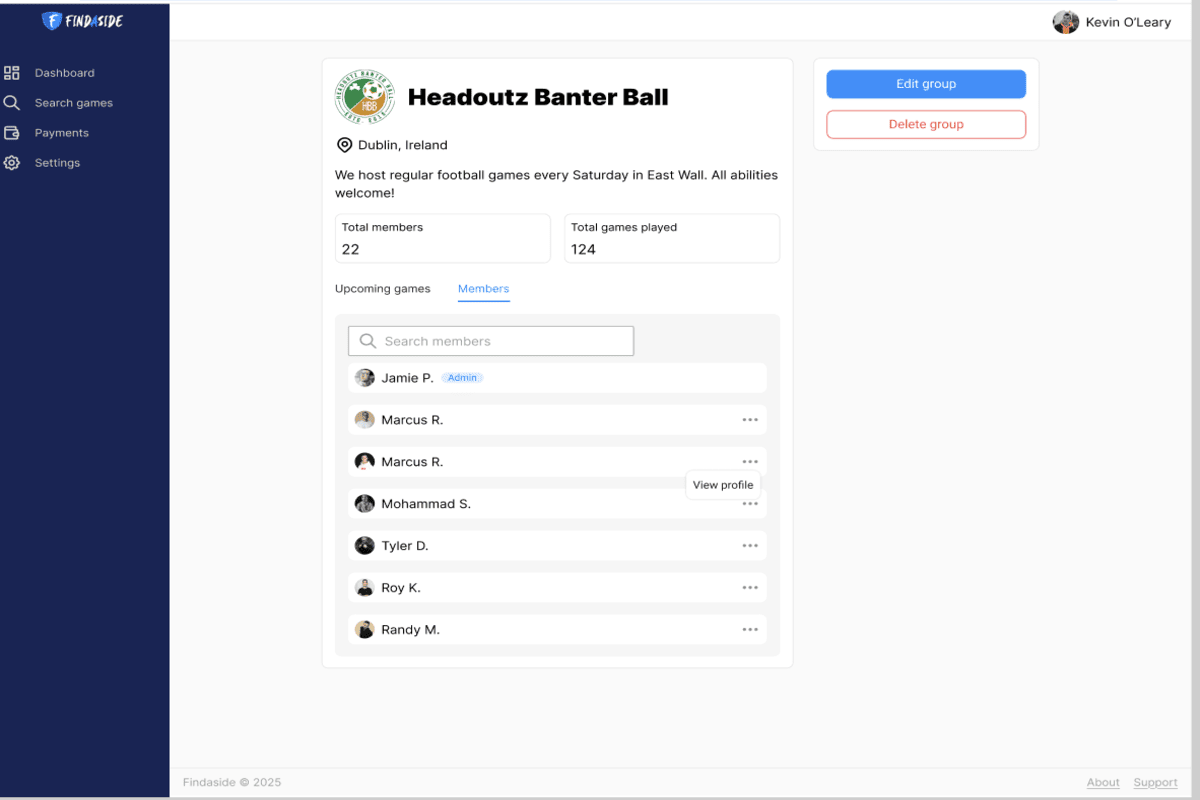
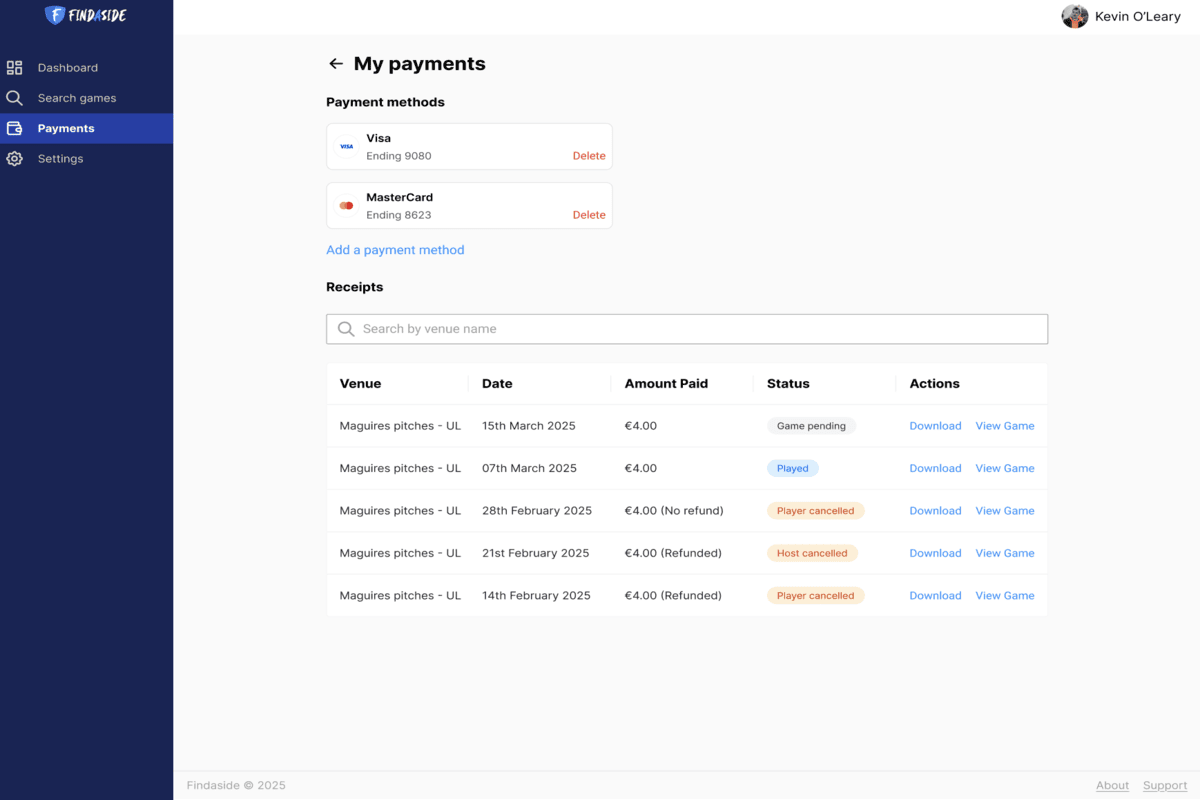
- +Built and refined responsive React interfaces for onboarding, dashboards, game creation, discovery, player management and payment-related flows.
- +Developed reusable UI components and layouts for desktop and mobile.
- +Worked with empty states, loading states, dialogs and confirmation flows to communicate interface behaviour.
Marketing website
- +Developed the product’s Next.js marketing website using Tailwind CSS v4.
- +Translated product information into responsive marketing-page sections.
03 / DECISIONS
How the system took shape
- 01
Used reusable components and responsive layouts to maintain consistency across workflows.
- 02
Represented loading, empty and confirmation states alongside the main interface flows.
- 03
Worked on the React application’s user-facing interfaces and reusable components.
- 04
Developed the marketing website using Next.js and Tailwind CSS v4.
Product context and reasoning
- Separated host-oriented game-management interfaces from player discovery and joining flows.
- Kept game, player and payment-related information understandable across desktop and mobile.
04 / PRODUCT
Selected interface
A focused view of the product states and workflows that carry the core experience.
05 / OUTCOME
Outcome and reflection
Exposure included Node.js/Express and Stripe-related tasks. Personal ownership of completed backend, authentication, map or payment-processing integrations is not asserted.
Contributed application interfaces for sports game-management workflows and developed the Next.js marketing website during professional contract work. The case study describes frontend delivery within a team, rather than ownership of the entire platform.
Working across application screens and marketing pages reinforced the importance of clear states, consistent components and communication with the wider product team.